
Dispatches · No. 10 · Announcement ·
Queer Aging and Endings in Healthcare at the Wilson Centre Research Day
Christian Schulz-Quach presented a multimodal education program on queer aging and the end of life, bridging scholarship, co-design and documentary practice, at the Richard K. Reznick Wilson Centre Research Day on 29 October 2026.
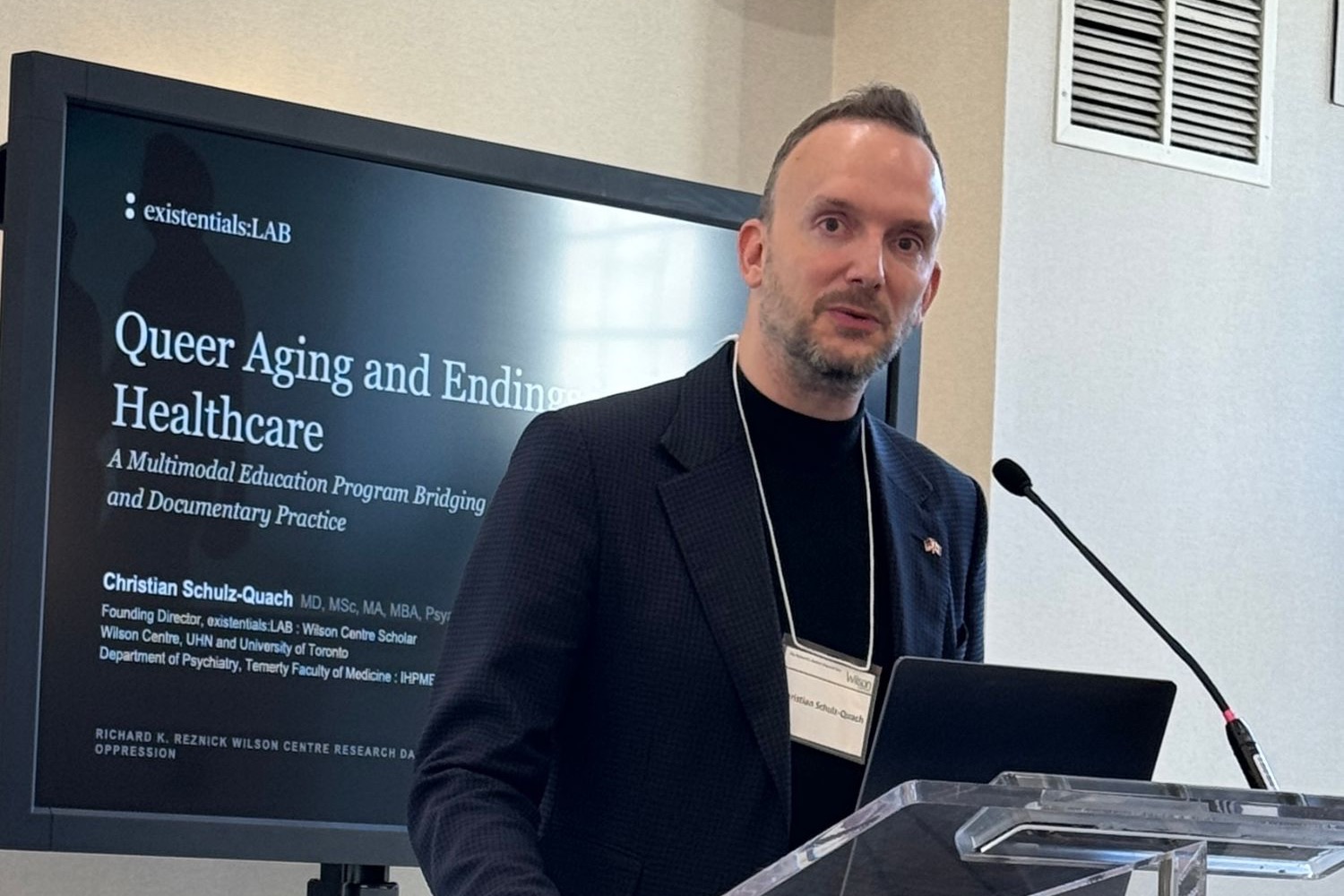
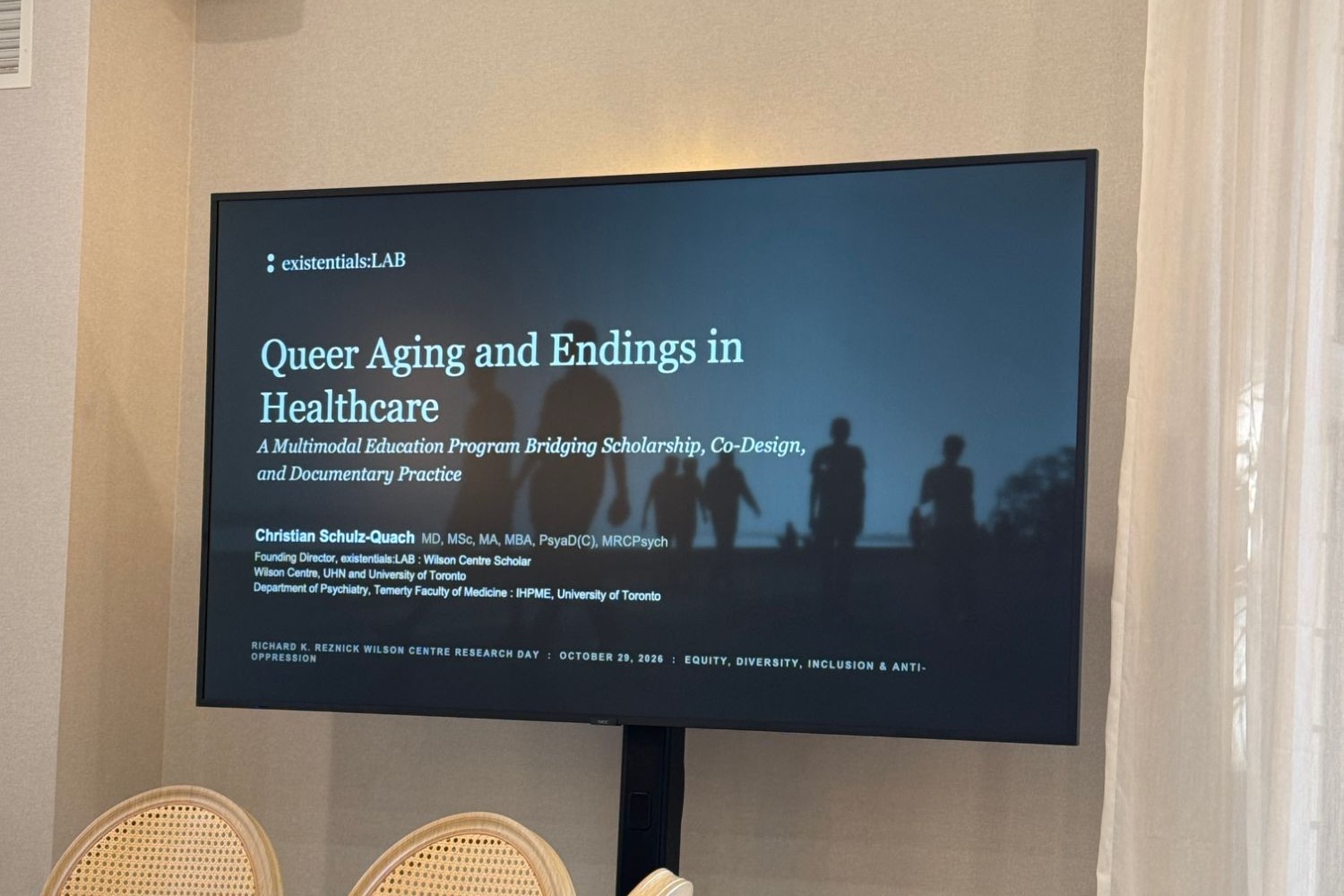
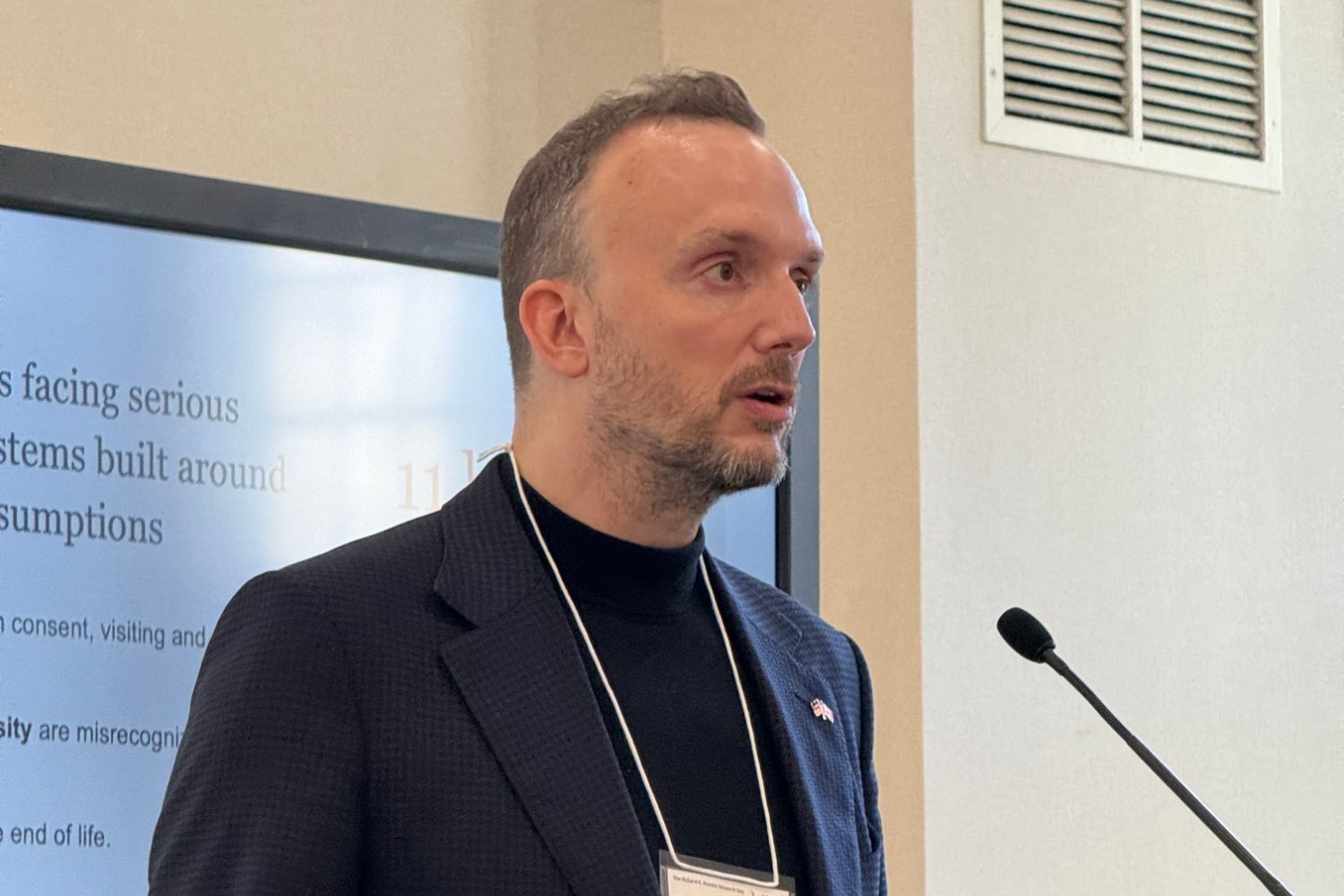
On 29 October 2026, Christian Schulz-Quach presented “Queer Aging and Endings in Healthcare: A Multimodal Education Program Bridging Scholarship, Co-Design, and Documentary Practice” at the Richard K. Reznick Wilson Centre Research Day, in its session on equity, diversity, inclusion and anti-oppression.
The presentation began with a gap in care and in health professions education. 2SLGBTQIA+ elders facing serious illness meet care systems built around heteronormative assumptions: chosen family can be left out of consent, visiting and bereavement, gender and relationship diversity are misrecognized, and grief at the end of life often goes unacknowledged. Few sustained, evidence-informed curricula prepare interprofessional clinicians for queer aging and dying.
One program, five ways of working
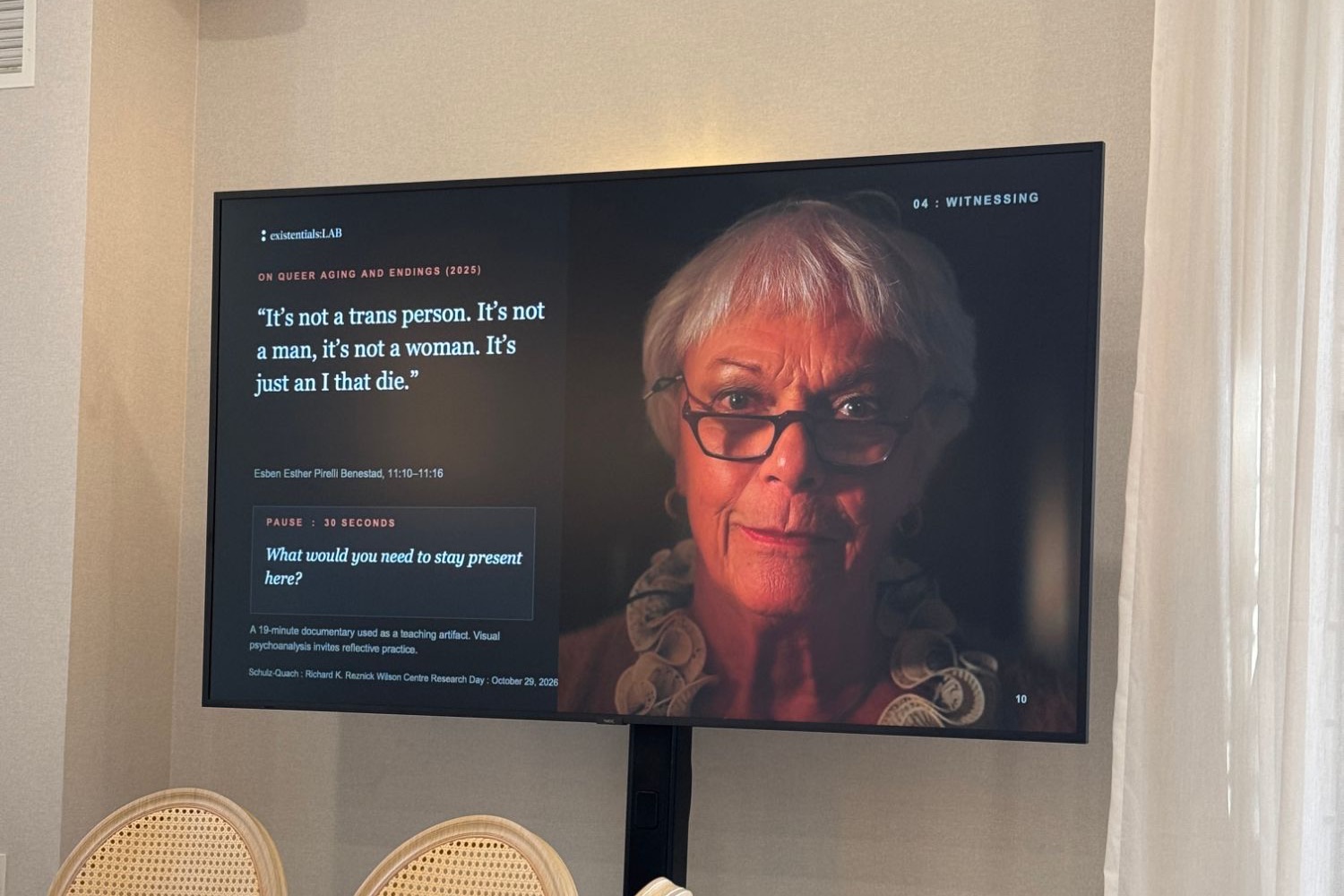
Developed with the Sexual and Gender Diversity in Cancer Care (SGDc) Program at Princess Margaret Cancer Centre, the program works in five ways. Scholarship: the book chapter “Queer Ageing and Endings” (Schulz-Quach and Kennedy, 2026) sets its conceptual scope. Listening: a mixed-methods needs assessment with patients, caregivers and clinicians decides what the curriculum must address. Co-design: PMChosenFamily, a bilingual eLearning curriculum co-developed with clinicians and patient partners, has reached 2,206 learners in 34 countries. Witnessing: the documentary On Queer Aging and Endings (2025) is used as a teaching artifact for reflective practice. Belonging: QUEERMUNITY, a queer-affirming psychotherapy support group, offers positive belonging within the cancer centre.
The talk closed with three principles for equity-oriented health professions education: listen before you teach; let art carry what data cannot; and build belonging, then measure it. They apply beyond oncology, in palliative, geriatric and primary care.
A note from the lab
This program brings together the questions at the centre of existentials:LAB: how clinicians learn to stay with finitude, identity and belonging, and how documentary and arts-based methods can hold what data alone cannot. We thank the Wilson Centre for the opportunity to share this work, our colleagues in the SGDc Program, Esben Esther Pirelli Benestad and Elsa Almås, and the QUEERMUNITY participants.